When a Critical Initiative Starts to Slip, You Don't Need a Hero. You Need a Partner.
Jul 06, 2026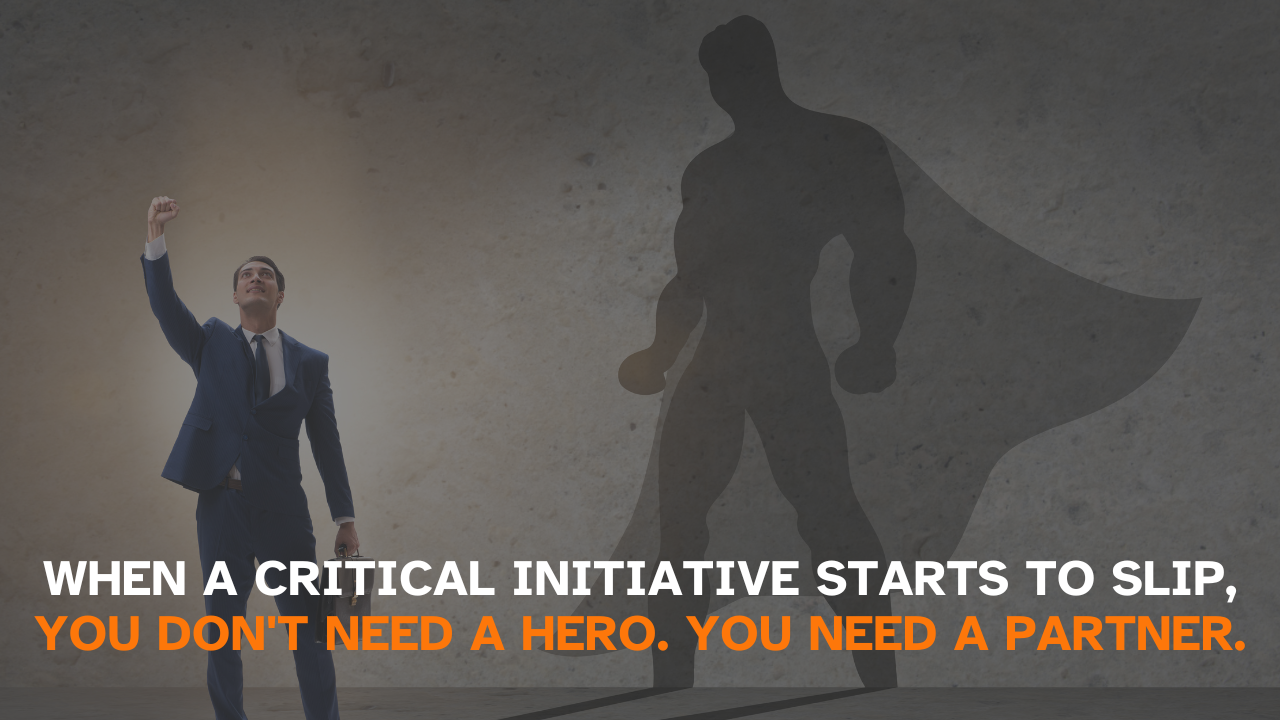
If you're leading a PMO or sitting on an Executive Steering Committee, you already know how this story starts. A strategic initiative — the kind with real budget, real visibility, and real consequences if it fails — begins to slip. Not because anyone stopped caring. Not because the plan was bad on paper. It slips because the internal team responsible for keeping it on track is already stretched across three other strategic priorities, and something has to give.
This isn't a failure of effort. It's math. You can't manage five fires with three firefighters and expect all five to go out on schedule.
That's exactly where one of our Fortune 200 clients found themselves.
The Situation Was Familiar — Even If the Stakes Weren't
The client had engaged a Big 4 global Service Integrator to design and implement a new SAP eCommerce solution — a major initiative with plenty of moving parts and even more eyes on it. The design work was solid. But internally, the project management capacity needed to keep it moving wasn't there. Their PMs were already carrying full plates on other strategic programs, and pulling them off those efforts to focus here would have just moved the risk somewhere else.
The result was predictable, even if it was still painful to watch unfold:
- Schedule delays stretching into months
- Budget overruns well beyond what anyone had planned for
- A Steering Committee losing confidence, meeting over meeting
- A broader portfolio now at risk because one program was pulling focus and resources from everything around it
None of this reflected badly on the client's team. It reflected a resourcing reality that most PMOs hit eventually: strategic ambition outpaces the bandwidth to execute all of it well, all at once.
What They Needed Wasn't Rescue Language. It Was Capacity and Clarity.
The client didn't need someone to parachute in, take over, and tell everyone what they'd been doing wrong. They needed an experienced hand who could step into the gap, bring structure back to a program that had lost it, and work with their existing team and the Service Integrator — not around them.
So that's what we did. We assigned a consultant suited to the specific dynamics of this program, and got to work on the fundamentals:
- Assessing where things actually stood — not where the status reports said they stood, but the real gaps between plan and reality
- Rebuilding governance and a change management plan the Steering Committee could trust again
- Defining a delivery approach that gave the program a credible path forward, not just a patched-together recovery plan
- Leading collaboration between the client and the Big 4 Service Integrator, so both sides were solving the same problem instead of managing around each other
- Providing hands-on program leadership day to day, so the client's internal PMs could stay focused on the other initiatives that still needed them
The shift wasn't dramatic. It was steady. Alignment came back. Communication got clearer. And the program found its footing again.
The Outcome Mattered More Than the Optics
By the time the dust settled, the results spoke for themselves:
- The SAP eCommerce platform launched on schedule and within budget
- The Executive Steering Committee regained real alignment on cost, scope, and quality
- Key milestones across the client's strategic roadmap got back on track
- The relationship didn't end when the program did — the client came back for additional engagements in the years that followed
That last point is the one we care about most. We weren't brought in to look impressive in a single moment of crisis. We were brought in to solve a real problem, and the fact that the client wanted to keep working with us afterward says more than any case study metric could.
If This Sounds Familiar
Maybe you're not in crisis mode right now. But if you've got a strategic initiative that's starting to wobble, and a PM team that's already maxed out holding everything else together, you don't need to wait until it becomes an Executive Steering Committee problem.
Let's talk about where things stand.
Follow Us on LinkedIn